
Hello In Stitches family,
You need caps.
Seems simple enough, right?
Then you start looking at your options and suddenly you’re choosing between structured and unstructured, 5-panel and 6-panel, snapback and stretch fit. Someone asks what kind of closure you want. And did you know that little button on top of a cap actually has a name?
There’s a lot more to a cap than you might think.
The good news is that you don’t need to become a cap expert to order custom embroidered caps. That’s what we’re here for. But understanding a few basics can help you narrow down what you like and choose a cap that works well for your logo, team, business, or organization.
So, let’s talk caps.
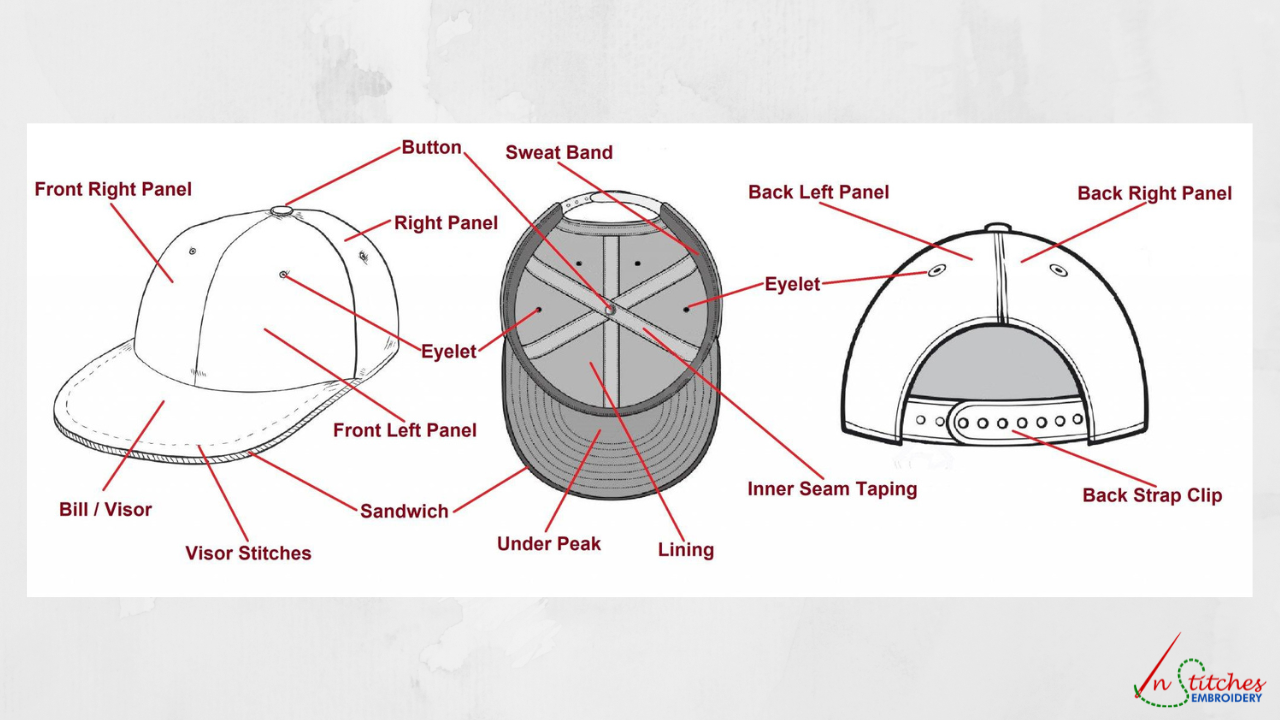
Parts of a Cap: What Is Everything Called?
Before we get into different types of caps, it helps to know a little cap vocabulary.
The crown is the main fabric portion that sits on your head. It’s made from individual panels, including the front, side, and back panels.
The bill, also called the visor or brim, is the part that extends over your face. Flip it over and you’re looking at the underbill or undervisor.
Those little holes around the crown are eyelets, which help with ventilation. Inside the cap, you’ll usually find a sweatband around the bottom edge and seam tape covering the seams.
And that fabric-covered button sitting at the very top?
It’s called a squatchee.
Now you have a fun piece of trivia to pull out the next time someone comments on your hat.
What Is a Tactical Cap?
You may also see caps specifically designed without that button on top. These are Tactical Caps.
The buttonless design gives the top of the cap a smoother, lower-profile surface and can make the cap more comfortable when worn with certain types of equipment or headgear.
If you prefer the look or function of a cap without a top button, ask us about Tactical Cap options.
Structured vs. Unstructured Caps: What’s the Difference?
This is one of the biggest choices you’ll make when selecting a cap, and thankfully, it’s also one of the easiest to understand.
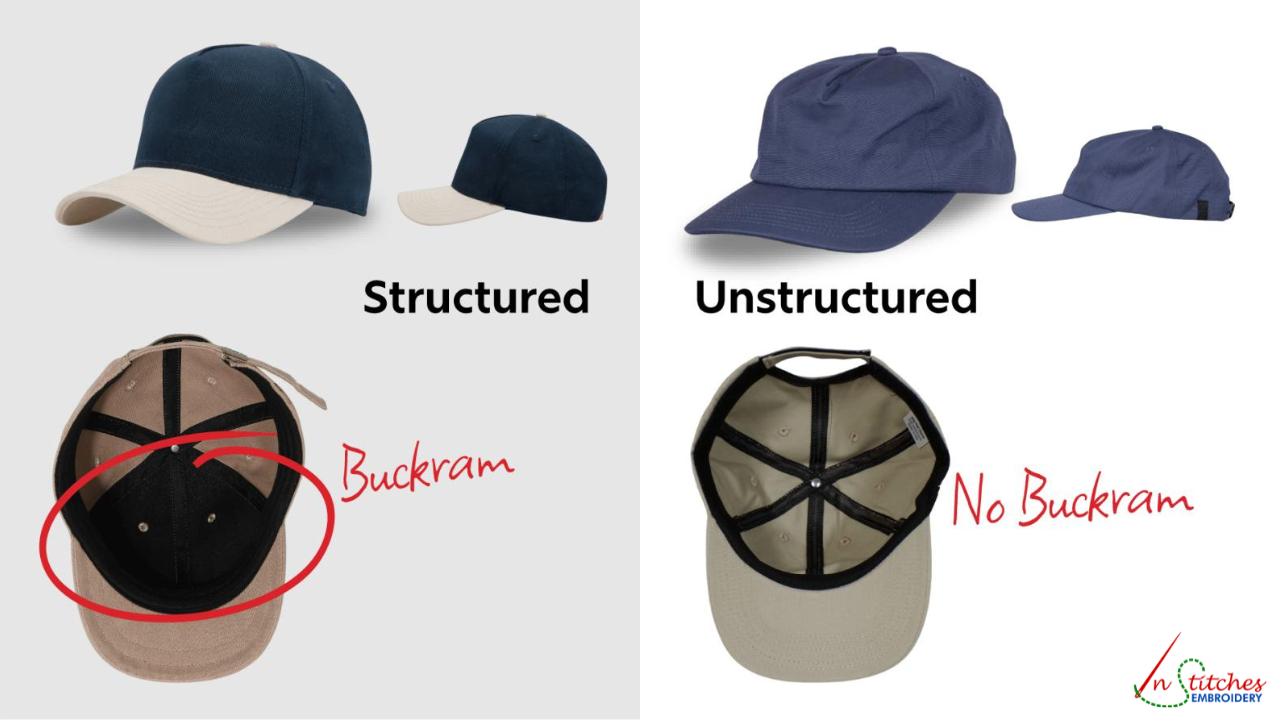
Structured Caps
A structured cap has a stiff backing behind the front panels, usually made with a material called buckram.
That reinforcement helps the crown maintain its shape, even when nobody is wearing it. Structured caps tend to have a crisp, defined appearance and are commonly used for:
- Company and employee apparel
- Sports teams
- School spirit wear
- Uniforms
- Embroidered logos
- Patches
The firm front also gives us a nice, stable surface for embroidery.
Unstructured Caps
An unstructured cap has little or no stiff backing in the front. Put it down on a table and the crown will usually collapse rather than standing upright.
These caps conform more closely to the wearer’s head and have a softer, more casual look. The classic dad cap is a good example.
Unstructured caps can absolutely be embroidered, but the design needs a little more consideration. Size, digitizing and stabilization can all affect the finished result.
The easiest way to remember the difference?
Structured = holds its shape.
Unstructured = soft and conforms to your head.
Neither is better. It’s about the look and feel you want.
5-Panel vs. 6-Panel Caps
Here’s another choice that can sound like industry jargon until you actually see the two caps side by side.
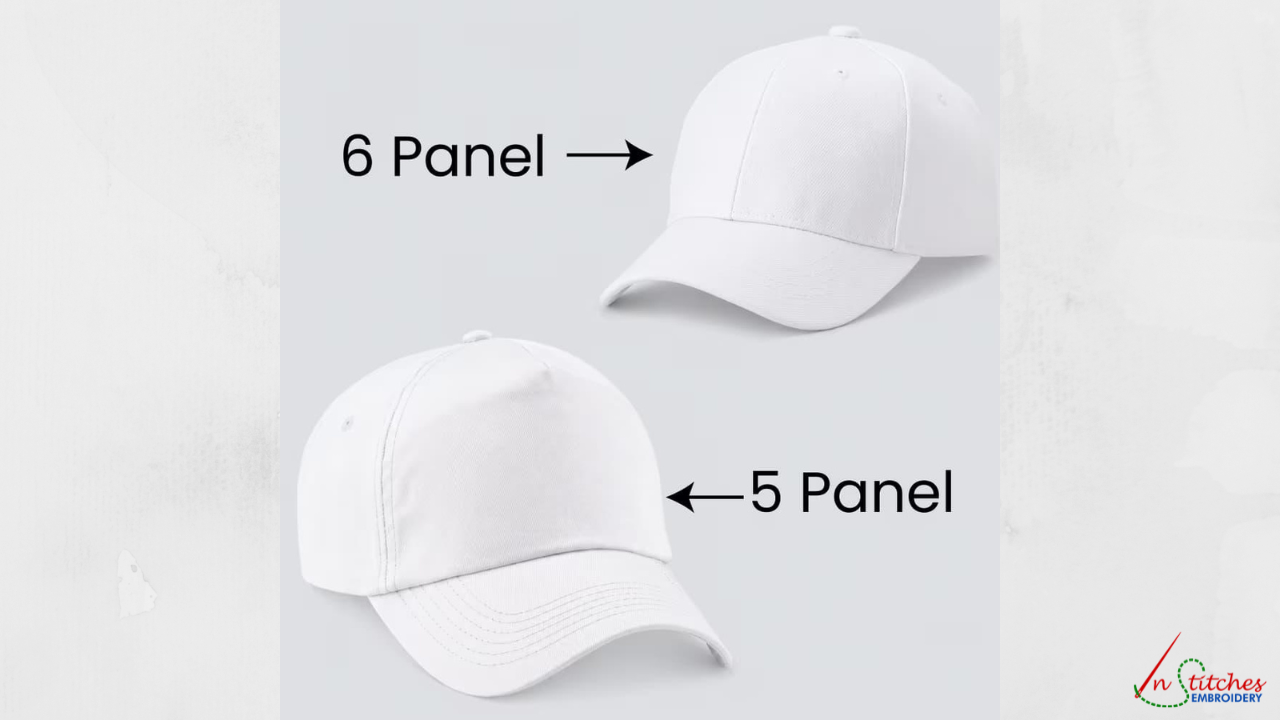
The number refers to the pieces of fabric used to construct the crown.
What Is a 5-Panel Cap?
A 5-panel cap generally has one solid panel across the front.
That means there is no seam running vertically through the center of your logo area.
That uninterrupted space can be especially useful for:
- Larger or wider embroidered designs
- Leatherette patches
- Woven patches
- Detailed logos
- Designs with small lettering
You’ll often see 5-panel construction on trucker, camper, rope and other modern cap styles.
What Is a 6-Panel Cap?
A 6-panel cap has two front panels that meet at a center seam. It creates the rounded, contoured shape most people associate with a traditional baseball cap.
Six-panel caps are extremely popular and work beautifully for most embroidered logos.
The center seam doesn’t mean you can’t embroider across the front. We do it all the time! It simply means we need to take that seam into consideration, particularly if your design includes very fine details or tiny lettering directly in the center.
Here’s the easy version:
5-panel = solid front without a center seam.
6-panel = traditional rounded front with a center seam.
What Are the Different Types of Cap Closures?
Turn the cap around and you’ll find another decision waiting for you.
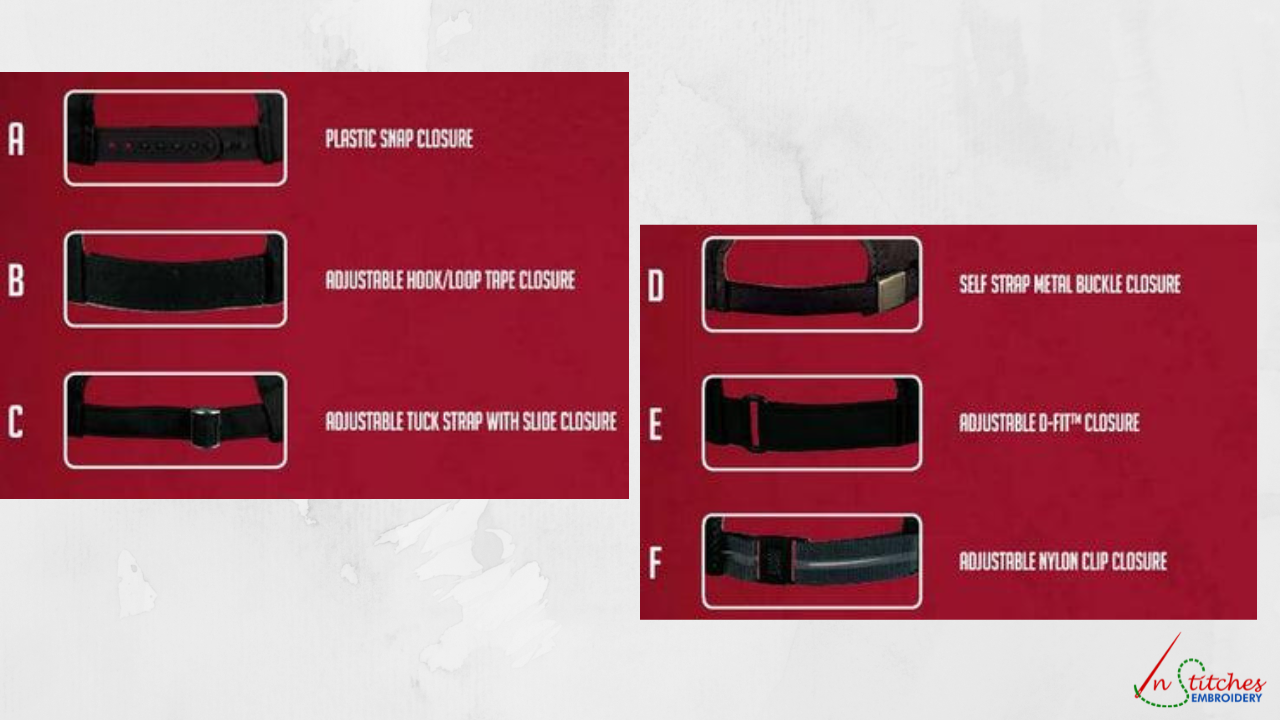
There are quite a few types of cap closures, but for most customers, we can simplify them into four main categories.
Snapback
A snapback cap uses adjustable plastic tabs that snap together. They’re especially common on trucker and baseball-style caps.
They’re easy to adjust and work well when you’re ordering caps for a group because one cap can accommodate a range of head sizes.
Adjustable Strap
This is a broad category that includes several different closure styles.
You might see a fabric strap with a buckle or metal clasp, a slide buckle, a hook-and-loop closure, or a fabric strap that tucks neatly into an opening at the back of the cap.
These can give the cap a clean, finished appearance while still allowing the wearer to adjust the fit.
Stretch Fit
Instead of a visible adjustment in the back, stretch-fit caps use elastic within the sweatband to create a comfortable fit.
They’re typically offered in sizes such as S/M and L/XL rather than one-size-fits-most.
Fitted
A fitted cap doesn’t have an adjustment mechanism at all. Instead, you purchase the cap according to head size.
That creates a very clean look, but knowing your audience’s sizes becomes much more important when ordering for a group.
There are other options, too, including elastic backs and toggle closures commonly found on outdoor or performance caps.
Not sure which one makes sense for your group? That’s exactly the kind of thing we can help you figure out.
Where Can You Put Embroidery on a Cap?
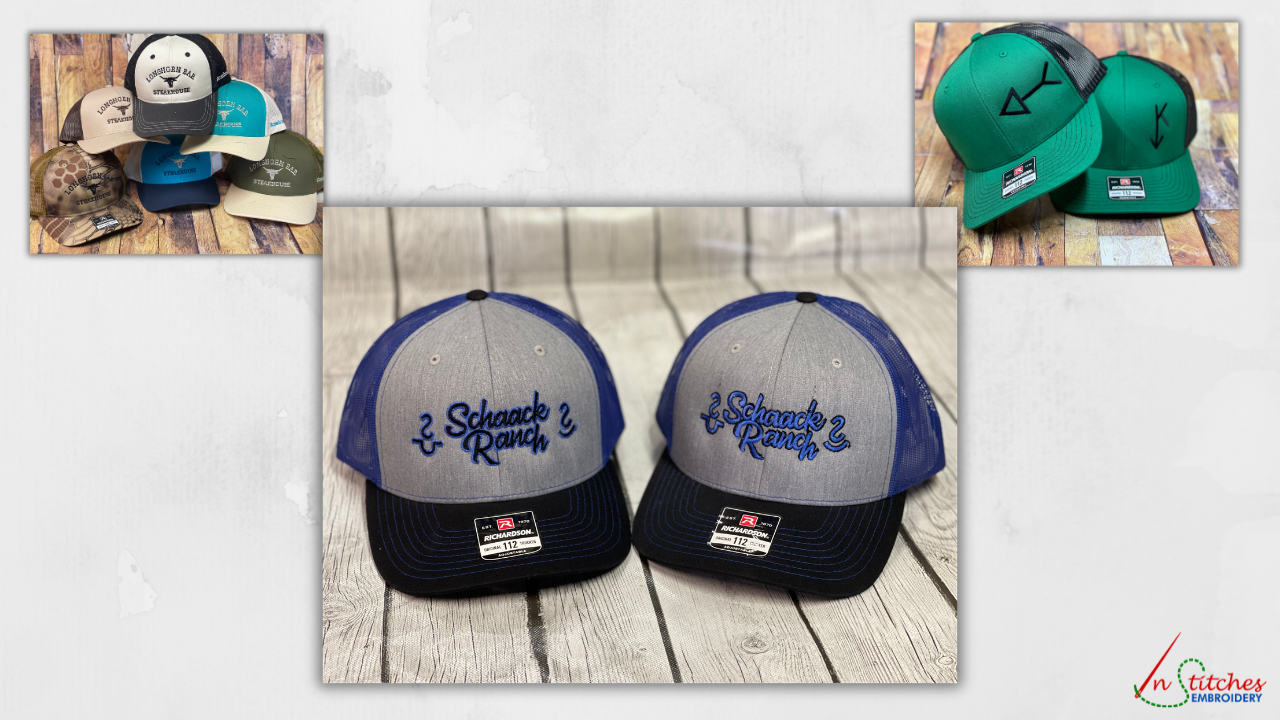
The front may be the most obvious place for your logo, but it isn’t your only option.
Common cap embroidery locations include:
- Front Center: The classic spot for your main logo or design.
- Left Front or Right Front: An off-center option that can create a different look.
- Left Side or Right Side: Great for smaller secondary logos, text or additional branding.
- Cap Back: Often used for a business name, small logo, website or other secondary design.
Depending on the cap and your design, you can even combine locations.
For example, you might put your primary company logo on the front and a smaller design or text on the back.
When we’re helping you choose placement, we’re looking at more than what fits. We want the finished cap to look intentional and balanced.
What Are the Best Caps for Embroidery?
This is where choosing the cap and choosing the decoration really need to happen together.
Structured caps are generally excellent for embroidery because the reinforced front panels create a firm decorating surface. They’re easier to hoop and help designs maintain their shape.
But that doesn’t mean you need a structured cap if you love the relaxed look of an unstructured one.
Unstructured caps can look fantastic with embroidery. We simply need to consider the design size, placement, digitizing and stabilization to get the best result.
Five-panel caps can also be a great choice for embroidery and patches because of their uninterrupted front panel.
The important thing is this:
Don’t choose your cap without thinking about what you’re putting on it.
And don’t finalize a complicated cap design without thinking about the cap it’s going on.
The two work together.
Embroidery or a Patch: Which Should You Choose?
Caps give you plenty of decorating options beyond traditional embroidery.
Direct embroidery stitches your design directly into the cap. It’s a classic choice for company logos, teams, schools and organizations.
Patches give you a different look and can be especially striking on caps. Depending on the project, you may consider options such as leatherette or woven patches.
A 5-panel cap’s large, seam-free front can make it especially well suited for patches, although patches can work beautifully on many 6-panel caps as well.
If you aren’t sure which approach will look best with your logo, show us your design. We can help you decide.
Which Cap Should I Choose?
After reading all of that, you may still be thinking:
Okay…but which one do I actually order?
Start with how the caps will be used.
If you’re ordering professional-looking employee caps, you might prefer the crisp shape of a structured cap.
If you’re creating casual branded merchandise, you might love the softer look of an unstructured cap.
If you have a large patch or wide logo, a 5-panel cap may give you the decorating space you’re looking for.
If you want that traditional baseball-cap look, start with a 6-panel.
If you’re ordering for a large group of people, an adjustable closure may make sizing much easier.
And if you’re still not sure?
That’s okay.
Let In Stitches Help You Find the Right Cap
We don’t expect you to know the difference between buckram and seam tape or whether your logo will work better on five panels or six.
That’s our part.
Tell us who the caps are for, how they’ll be used, the look you like, and what you want to put on them. We’ll help you sort through the options and find the combination that makes sense for your project.
Because at the end of the day, you don’t just want your logo embroidered on a cap.
You want it on a cap people will actually want to wear.
Ready to create your custom caps? Contact In Stitches Embroidery and let’s find the right fit for your project.